
These popular topics are heating up. Explore today's most viewed pages.
When was the last time you heard an owl outside your home? Chances are, if there is a constant light source at night, you might not hear or see one at all.
Many owl species depend on the dark to surprise their prey while using their heightened hearing and silent flight. When you leave your porch lights on, you might be taking away valuable hunting areas.
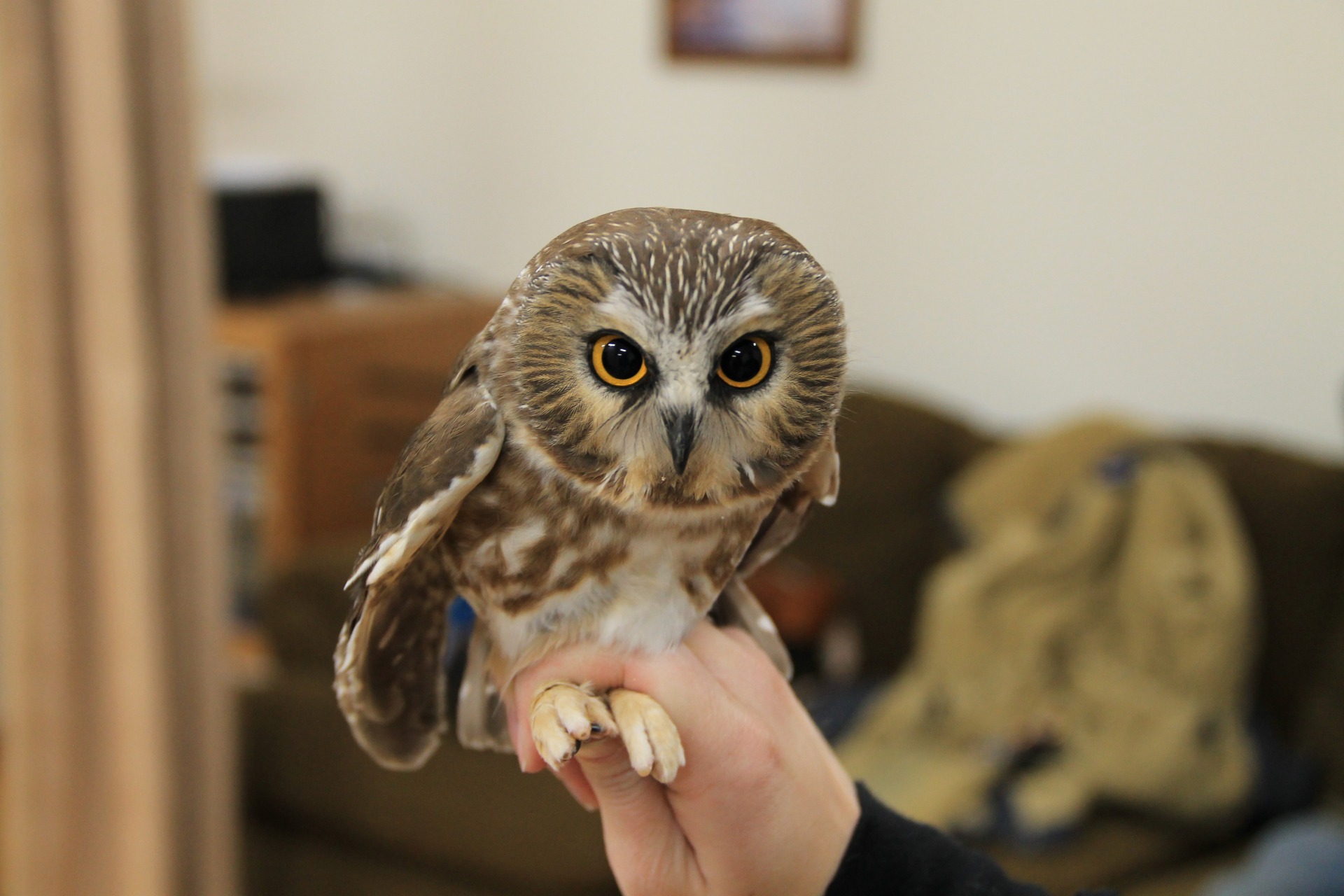
Some species that you might spy in this part of Iowa (if you're lucky!) include the Barn Owl, the Barred Owl, the Eastern Screech Owl, the Great Horned Owl, the Northern Saw-whet Owl (pictured above), and the Short-eared Owl.
Dark skies are essential for so many bird species, whether they are migrating or hunting prey. In the case of the owl, some species migrate, while others stay in their established territory year-round.
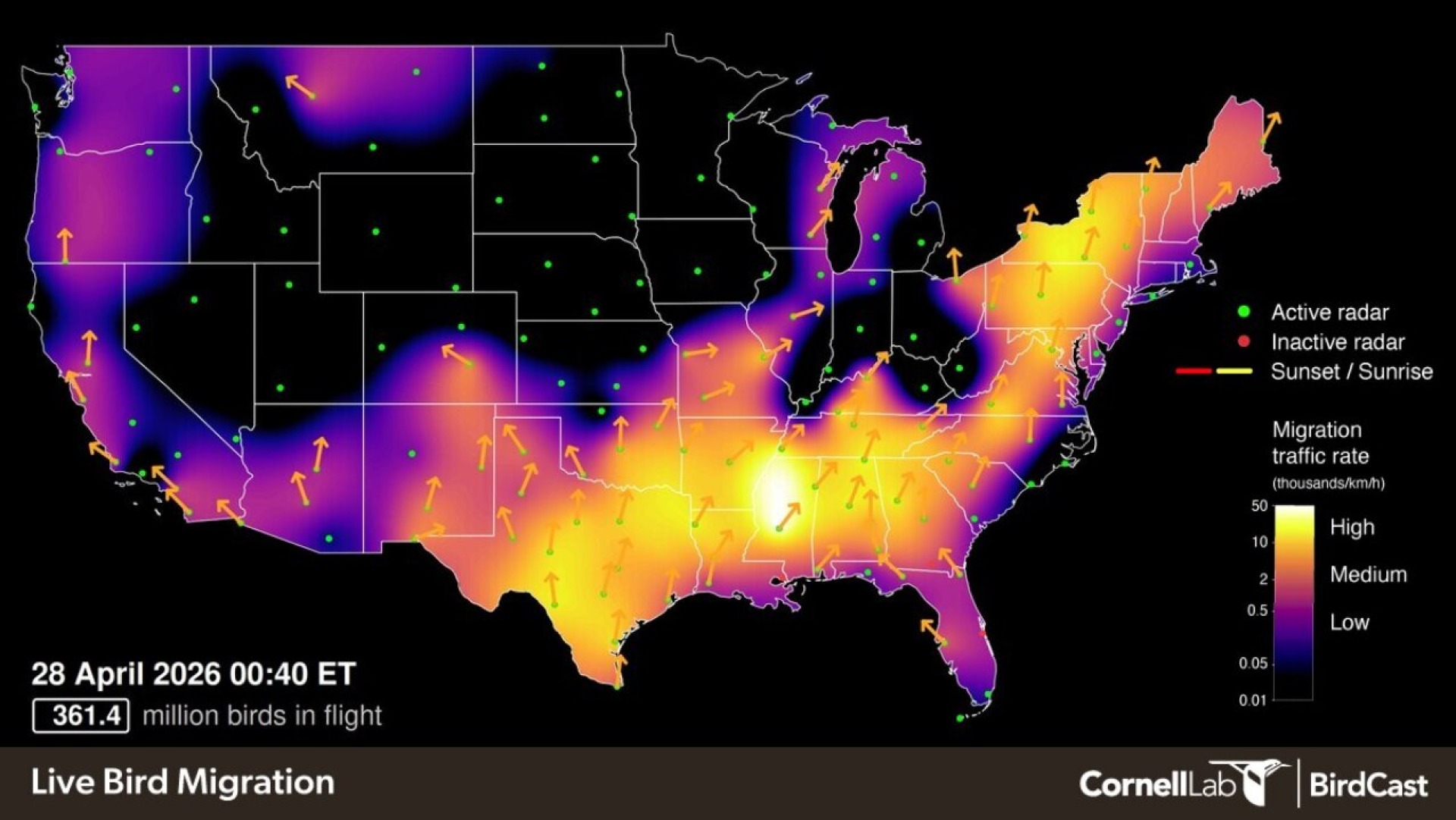
From about mid-April to mid-May, spring bird migration peaks. This means that millions of birds take to the skies, often at night, as they venture to their summer breeding grounds. According to Cornell Lab of Ornithology's BirdCast (pictured below), on April 27th, over 361 million birds traveled into the early morning on the 28th, with peak travel occurring at 1:00 a.m.
Learn more about how light at night can cause detrimental disruptions to our flying friends in our International Dark Sky Week blog post: Wildlife & The Night
🔴 Use headlamps with a red light option. Red light wavelengths are less disruptive to wildlife (and better for our human eyes, too!)
💡Only use outdoor lights when you need to.
🌌 Turn off lights from 11:00 p.m. to 6:00 a.m.
👇 Add a shield to direct your light source.
⏱️ If possible, use motion-activated lights or timers.
Read more: Shining Some Light on the Vanishing Night
Read more: How Artificial Light Affects Us
Read more: Wildlife & the Night
Read more: The Cost of Wasted Light